


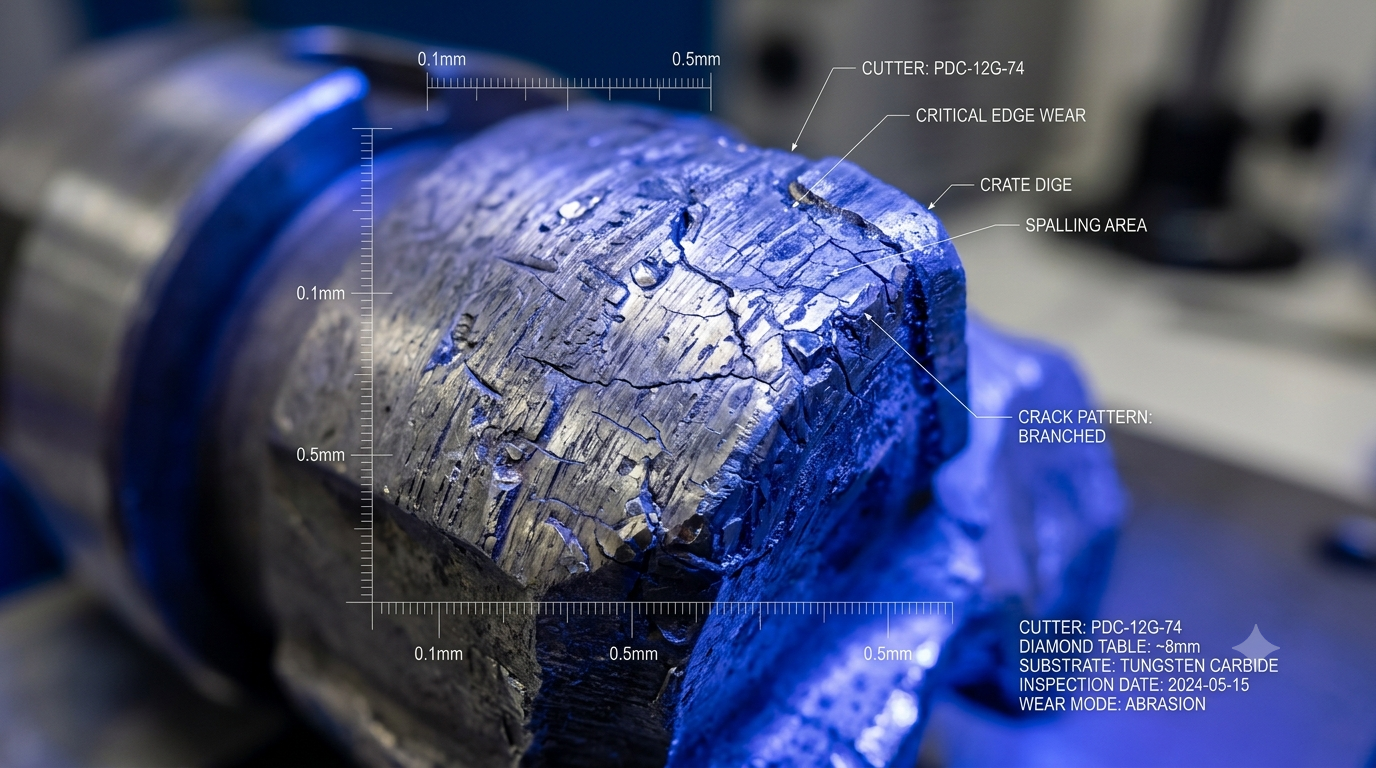
Maximizing the return on a PDC or tricone drill bit requires accurate wear evaluation in the field. Pulling a bit too early leaves unused drilling hours on the table; pulling it too late leads to total matrix washouts, destroyed cutter pockets, and lost scrap metal value. Mastering IADC dull grading allows engineers to make precise asset recovery decisions.
PDC Cutter Wear Grade vs. Action Matrix
| Wear Indicator (IADC) | Physical Visual Symptoms | Economic Field Action | Asset Recovery Outcome |
| Stage 1 (Grade 1-2) | Slight cutter chamfer wear; light abrasive flat. | Keep in drilling rotation; adjust WOB/RPM. | Active Tool |
| Stage 2 (Grade 3-4) | Micro-chipping on diamond edge; body intact. | Pull bit for shop inspection; replace damaged cutters. | High Rebuild Potential |
| Stage 3 (Grade 5-6) | Delamination, cutter spalling, matrix erosion. | Retire tool from field; transition to scrap recovery. | Max Scrap Value (Cutters intact) |
| Stage 4 (Grade 7-8) | Total cutter loss, blade ring-outs, core failure. | Scrap unit immediately; process for raw material. | Reduced Scrap Payout (Lost tungsten) |
[Wear Progression Lifecycle]
Light Chamfer Wear (Grade 1) ──► Optimal Pull Point (Grade 5) ──► Catastrophic Failure (Grade 8)
                                         │
                                  [MAX SCRAP ROI]
Key Technical Rules for Field Personnel
The Golden Rule of Bit Retirement: Retiring a PDC bit at IADC Grade 5-6 preserves up to 60% more tungsten carbide substrate volume compared to running the tool to total destruction (Grade 8).
Refer to standardized wear grading metrics from the International Association of Drilling Contractors (IADC).
Frequently Asked Questions (FAQ)
- Q: What is the difference between repairing/rebuilding a PDC bit and recycling it?
- A: Rebuilding involves unsoldering damaged cutters and braze-welding new cutters into existing pockets. Recycling involves melting the tool down completely to extract raw tungsten, cobalt, and steel when pocket damage is too severe for brazing.
- Q: How does thermal degradation affect cutter recyclability?
- A: Excessive heat (above 750°C downhole) breaks down cobalt binders in synthetic diamond tables. While this renders the cutter unusable for drilling, the underlying carbide substrate remains 100% recyclable.
- Q: Can you provide dull bit grading training for our field rig personnel?
- A: Yes, we provide field pocket guides and technical training sessions to help rig hands accurately grade bits according to IADC standards.
Submit photos of your worn bits to اتصل بنا for a free wear analysis report.